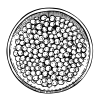
Sturgeon vs Non-Sturgeon Caviar
In traditional culinary usage, caviar means salt-cured sturgeon roe. Salmon, trout, flying-fish, lumpfish, and other eggs are non-sturgeon roe, although some products use qualified names such as salmon caviar. They can be excellent foods with different textures and culinary uses. A sturgeon vs non-sturgeon caviar comparison should clarify identity rather than treating every alternative as an imitation.
What Is the Difference Between Caviar and Fish Roe?
Roe is the broader term for fish eggs. Sturgeon caviar is one preparation within that broader category. The fish species, cure, and other ingredients determine how the product tastes and behaves. A jar labeled with a qualified fish name can contain real eggs from that fish without being traditional sturgeon caviar.
Why the Fish Name Matters
The label should tell you what you are eating. A dark bead does not prove sturgeon origin, and a product marketed with luxury language may belong to another category. Check the species and ingredients instead of using price or color as an authentication method.
Non-Sturgeon Roe Is Not Automatically Fake
Salmon roe is genuine salmon roe, just as trout roe is genuine trout roe. Misrepresentation occurs when a seller presents a product as a different species or preparation. Plant-based pearls are another category and should be identified as alternatives rather than fish eggs.
STURGEON AND OTHER ROE GUIDE
Eight Common Products and Their Characteristics
Explore sturgeon caviar, salmon roe, trout roe, tobiko, masago, lumpfish roe, paddlefish roe, and plant-based pearls.
Sturgeon Caviar
Traditional salt-cured roe
Selections such as Osetra, Sevruga, Kaluga, Siberian, and white sturgeon offer a range of pearl sizes, membrane resistance, and rich marine finishes. Their differences make species disclosure especially useful.Salmon Roe
Large pearls and liquid burst
Salmon eggs are typically larger and brighter in color than sturgeon caviar. Their liquid burst makes them useful when the roe is intended to be a prominent part of the bite.Trout Roe
Bright pearls with a distinct burst
Trout roe generally offers smaller pearls than many salmon selections, often with a bright orange appearance. It can provide a distinct burst without the same large-egg presentation.Tobiko
Fine grains and crisp texture
Tobiko is flying-fish roe, familiar from sushi. Its small eggs provide a crisp, fine-grained texture. Seasonings and added colors can change the appearance and flavor of retail products.Masago
A fine-grained topping
Masago commonly refers to capelin roe. Its fine grains work well as a topping or mixed component. Read ingredients because prepared products may include additional seasonings.Lumpfish Roe
An accessible garnish
Lumpfish roe is often sold as an accessible garnish, including dyed black or red preparations. Its appearance can resemble other roe at a glance, so the product label remains essential.Paddlefish Roe
A related fish, a different family
Paddlefish are related to sturgeon but belong to a different family. Their roe is sold as paddlefish caviar in some markets. It should be identified clearly rather than presented as a named sturgeon species.Plant-Based Pearls
Check the ingredients
Seaweed-based and other formulated pearls imitate the presentation of roe. Their ingredients and eating characteristics differ from fish eggs. Check the label if vegetarian or vegan suitability is part of the purchase.Comparing Flavor and Texture
Sturgeon caviar is often chosen for the balance between membrane release and a rich finish. Salmon roe emphasizes a larger, more liquid burst, while fine roe such as tobiko contributes a different sensation across a dish. These are different culinary effects. Neither the larger size of salmon eggs nor the darker color of a substitute determines superiority.
Processing Can Change the Comparison
Salt, smoke, sauces, dyes, and heat treatment can all influence the result. Compare ingredient lists before attributing every difference to the fish. A heavily seasoned roe product and a lightly cured sturgeon selection are not equivalent tasting conditions.

Which Roe Should You Choose?
For a plain tasting focused on sturgeon varieties, choose clearly identified sturgeon caviar. For sushi, a colorful garnish, or a pronounced burst in a composed dish, another roe may be more appropriate. Think about the role of the ingredient: centerpiece, accent, crunch, color, or liquid release.
Matching Roe to a Dish
A mild blini or potato base leaves room for sturgeon caviar’s subtler differences. Salmon roe works well when larger individual eggs are part of the intended bite. Tobiko and masago can distribute fine grains across sushi or other composed preparations. These uses reflect texture and presentation rather than a prestige hierarchy.
Price and Value Across Categories
Non-sturgeon roe often occupies a different price range, but exact comparisons depend on species, preparation, origin, brand, and pack size. Compare price per gram alongside the serving purpose. Buying a costly sturgeon tin for a strongly seasoned dish may hide the features that attracted you to it.
Why Sturgeon Caviar Can Cost More
Sturgeon production can require years of fish rearing, specialized facilities, careful roe selection, and cold handling. Those costs help explain the category without guaranteeing that every expensive product is exceptional. Transparent sourcing and product condition still matter.

Labeling and Responsible Buying
Ask for the fish species, production origin, ingredient list, and storage instructions. For sturgeon and paddlefish products, relevant CITES labeling and trade requirements form part of traceability. Do not assume non-sturgeon means free of all sourcing obligations; requirements depend on the product and market.
Safety Is Separate From Prestige
All roe needs handling appropriate to its preparation. A luxury label does not establish safety, and an inexpensive alternative is not automatically unsafe. Follow product instructions, keep refrigerated products cold, and avoid tasting a questionable product to test its condition.
Frequently Asked Questions About Sturgeon and Other Roe
Have Questions About Sturgeon and Other Roe?
Find answers about roe identity, fish species, color, plant-based alternatives, tasting, and price.
Is all fish roe caviar?
Roe is the broad category. Traditional unqualified caviar refers to salt-cured sturgeon eggs.
Is salmon caviar fake?
Not when it is accurately sold as salmon roe or salmon caviar. It is a different product from sturgeon caviar.
Is paddlefish a sturgeon?
No. Paddlefish are related fish from a different family.
Can black color prove authenticity?
No. Other roe and formulated products can also be dark or colored.
Is tobiko the same as masago?
No. They generally refer to flying-fish and capelin roe respectively.
Are plant-based pearls vegan?
Some are, but check the complete ingredient list and the producer’s labeling.
Which works best for a plain tasting?
Choose the category you want to explore; use genuine sturgeon roe for a sturgeon caviar comparison.
Is non-sturgeon roe always cheaper?
No permanent price rule covers every species and preparation. Compare actual products.
Choose the Right Roe for the Experience
Start with accurate identity and the culinary effect you want. Sturgeon caviar, other fish roe, and formulated alternatives each have a role when they are described clearly and chosen for their own characteristics.