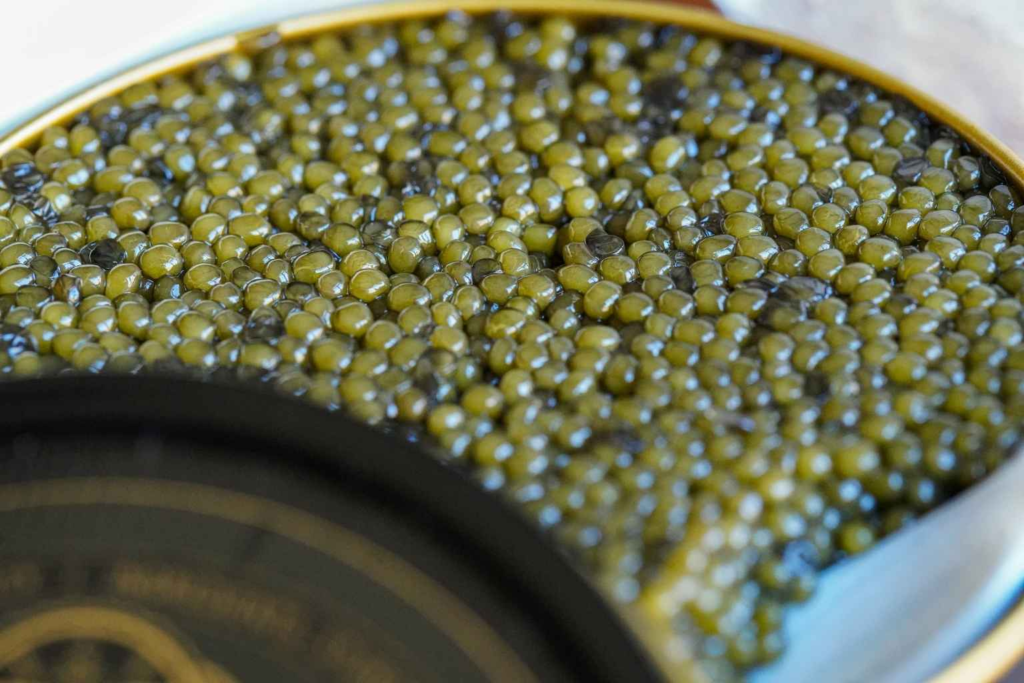
What Is Almas Caviar?
Origin and species behind Almas caviar
Almas comes from the roe of albino Beluga sturgeon, scientifically known as Huso huso. These fish are exceptionally rare and often reach ages between 60 and 100 years before producing roe suitable for harvest.
This advanced age contributes to both the size and quality of the eggs. The Caspian Sea, particularly along the Iranian coast, provides one of the few environments where these sturgeon historically thrived.
Why Almas caviar is so rare
The rarity of Almas caviar is driven by several factors:
Albino sturgeon are genetically rare
Only mature, older fish produce premium roe
Strict international regulations limit harvesting
As a result, production is extremely limited, making Almas one of the most elusive delicacies in the world.
Flavor Profile of Almas Caviar
Delicate and smooth tasting notes
The flavor is exceptionally delicate, with a smooth, almost creamy character. Unlike stronger caviars, it avoids aggressive salinity.
Tasting notes often include:
- Soft butter and cream
- Gentle nutty undertones
- Clean, almost sweet marine finish
This refined profile is a direct result of low-salt malossol processing and the maturity of the sturgeon.
Soft texture and sensory experience
Almas caviar features a soft texture, with large, fragile pearls that dissolve gently on the palate. The release of flavor is gradual, creating a layered and elegant tasting experience.
This softness distinguishes it from firmer varieties like Osetra or Kaluga, making it uniquely luxurious.

Why Almas Caviar Is the Most Expensive
Extreme rarity and limited production
Age and biological factors
Sturgeon must mature for decades before producing eggs. In the case of Almas, the oldest fish yield the most prized roe, significantly increasing production time and cost.
Record-breaking prices
Almas caviar is widely regarded as the most expensive caviar in the world. Prices can exceed $25,000 to $35,000 per kilogram depending on quality and origin.
Some rare offerings have reached even higher valuations, reinforcing its status as a culinary luxury.
How to Serve Almas Caviar
Traditional serving techniques
Almas caviar should be served chilled between 28°F and 32°F. Simplicity is essential.
Use:
- Mother-of-pearl spoon
- Glass or porcelain service
- Crushed ice base
Avoid metal utensils to protect the flavor.
Best pairings for Almas caviar
Pairings should enhance, not overpower:
- Vintage Champagne for acidity and elegance
- Blinis for a neutral, soft base
Avoid strong garnishes, as they can mask the subtle complexity of Almas.
Sustainability and Modern Almas Caviar
Conservation and CITES regulations
Beluga sturgeon are protected under international agreements. Trade is tightly regulated to prevent overfishing and population decline.
Iran remains one of the few regions historically permitted to manage controlled harvesting under strict oversight.
Shift toward ethical sourcing
Modern luxury markets increasingly prioritize:
Traceable sourcing
- Farm-raised alternatives where possible
- Conservation-focused practices
However, true Almas remains exceptionally rare due to its reliance on specific genetic and environmental conditions.
Sustainability and Modern Almas Caviar
Key authenticity indicators
Look for:
- Verified origin from Iran
- Clear species identification as Beluga
- Pale gold to ivory coloration
Due to its rarity, counterfeit or misrepresented products are common in the market.
Storage and handling
Store at near-freezing temperatures and consume within 24 hours after opening. Given its cost, proper handling is essential to preserve quality.
Frequently Asked Questions About Almas Caviar
Almas caviar is the rarest and most expensive type of caviar, sourced from albino Beluga sturgeon primarily found in the Caspian Sea. It is prized for its pale golden color, soft texture, and exceptionally delicate, creamy flavor with minimal salinity. Due to the advanced age required for these sturgeon to produce roe, true Almas caviar is extremely limited and highly regulated under international conservation laws. Its rarity, subtle taste, and historical prestige place it at the absolute pinnacle of luxury caviar.
What is Almas caviar?
Almas caviar is a rare golden caviar from albino Beluga sturgeon found in the Caspian Sea.
Why is Almas caviar so expensive?
Its price is driven by extreme rarity, long sturgeon maturation, and limited legal supply.
How much does Almas caviar cost?
It can exceed $25,000 per kilogram, making it the most expensive caviar in the world.
What does Almas caviar taste like?
It has a delicate, smooth, buttery flavor with minimal saltiness.
Is Almas caviar sustainable?
It is heavily regulated, but its rarity raises ongoing sustainability concerns.
Where does Almas caviar come from?
Primarily from Iran, specifically the southern Caspian Sea region.
How should Almas caviar be served?
Serve chilled with minimal accompaniments such as Champagne and blinis.
The Pinnacle of Caviar Luxury
Almas caviar stands at the highest level of gastronomic refinement. Its rarity, history, and delicate flavor define what true luxury means in the world of caviar.
For deeper expertise, explore why caviar commands such extraordinary prices and how sustainability is shaping the future of this iconic delicacy.