What Is Amur Sturgeon Caviar?
Amur sturgeon caviar comes from the Amur sturgeon, a freshwater sturgeon native to the Amur River basin along the border of China and Russia. This species is closely related to Kaluga sturgeon and is often used in premium aquaculture programs due to its roe quality and adaptability to controlled environments.
Species and Origin
Historically, Amur sturgeon inhabited the cold, fast flowing waters of the Amur River system. Today, commercial Amur sturgeon caviar is produced exclusively through responsible aquaculture, primarily in China. Long maturation cycles and carefully managed water conditions allow the sturgeon to develop roe with consistent texture, size, and salinity, while protecting wild populations from exploitation.
Amur Sturgeon Caviar Taste and Texture
Flavor Profile
Pearl Size and Structure
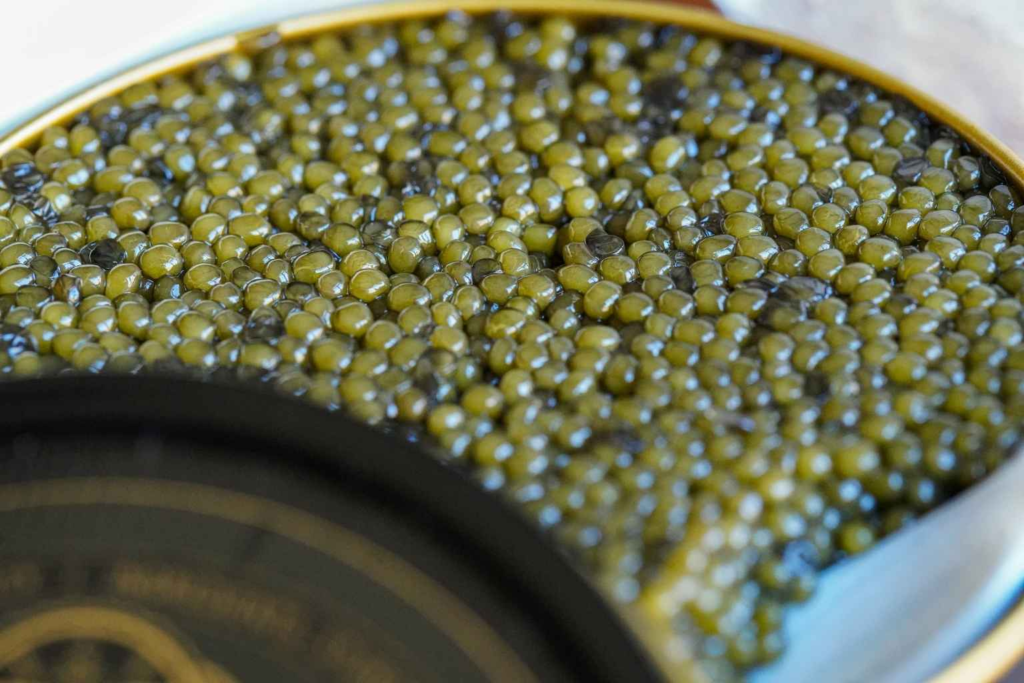
Pearls are medium to large, typically measuring 2.9 to 3.4 mm. They are firm with a defined pop, releasing a smooth, creamy interior. Color ranges from light brown and amber to olive gray, depending on maturity and grade.
Amur Sturgeon Caviar vs Kaluga and Osetra
Key Differences That Matter
Compared to Kaluga caviar, Amur sturgeon caviar has smaller pearls and a lighter, more delicate richness. Kaluga is deeper and more opulent, while Amur is cleaner and more restrained. When compared to Osetra from Russian sturgeon, Amur caviar is less mineral driven and more buttery, with a softer aromatic profile. This makes it highly versatile for both traditional service and modern cuisine.

Sustainability and Aquaculture Practices
Amur sturgeon caviar is firmly rooted in sustainable production.
Responsible Farming
All Amur sturgeon caviar available today is farm-raised. Producers rely on low density aquaculture, controlled feeding, and extended maturation to ensure roe quality while preserving the species. Malossol techniques are used to maintain natural flavor and pearl integrity.
Conservation and Compliance
Wild Amur sturgeon populations are protected under international conservation frameworks. Farmed production ensures full traceability, legal compliance, and ethical sourcing, making Amur sturgeon caviar a responsible luxury choice.
How to Serve and Pair Amur Sturgeon Caviar
Serving Guidelines
Serve well chilled at 28 to 32°F using a mother of pearl spoon. Allow the caviar to rest briefly after opening so the pearls relax and aromas emerge. Neutral accompaniments such as blinis, warm potatoes, or lightly buttered brioche highlight its balance and texture.
Ideal Pairings
Price Range and Market Position
Amur sturgeon caviar sits in the premium category.
Value and Accessibility

Frequently Asked Questions About Amur Sturgeon Caviar
Is Amur sturgeon caviar real caviar?
Yes. It comes from a true sturgeon species and meets all international standards for authentic caviar.
What does Amur sturgeon caviar taste like?
Clean, buttery, lightly briny, with subtle nutty notes and a smooth finish.
Is Amur sturgeon caviar sustainable?
Yes. It is fully farm-raised and produced under strict sustainability and conservation guidelines.
Where is Amur sturgeon caviar produced?
Primarily in China through advanced aquaculture programs based on Amur River sturgeon.
How should Amur sturgeon caviar be stored?
Keep refrigerated at 28 to 32°F. Consume within 24 to 48 hours after opening.
Who should choose Amur sturgeon caviar?
Buyers seeking balanced flavor, firm texture, and strong sustainability credentials at a premium price point.
Explore Amur Sturgeon Caviar Further
Amur sturgeon caviar represents refined modern caviar craftsmanship. Balanced, ethical, and versatile, it is often compared to other prized varieties such as white sturgeon caviar, which is known for its larger pearls, buttery texture, and clean, nutty finish. Continue exploring species comparisons, tasting notes, and pairing guides to better understand where Amur sturgeon caviar fits within the world of fine caviar.