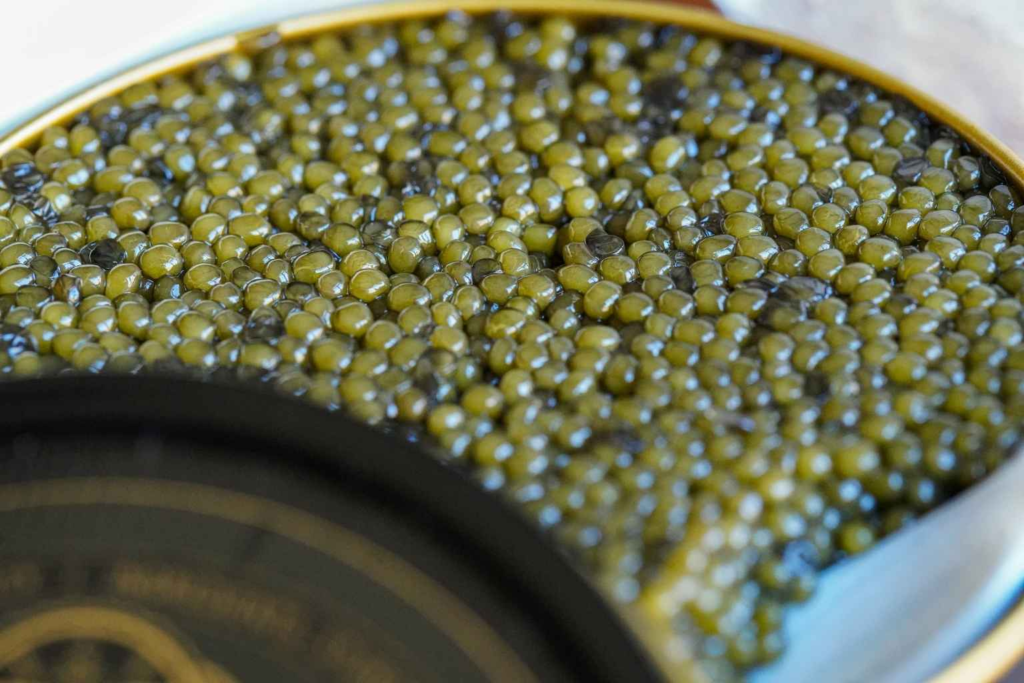
What Is Beluga × Sterlet Hybrid Caviar?
Beluga × Sterlet hybrid caviar is salt-cured roe from a hybrid sturgeon carrying genetic characteristics from both Huso huso and Acipenser ruthenus. Because both parent fish belong to the sturgeon family, Acipenseridae, the resulting roe qualifies as authentic caviar.
The hybrid was developed for aquaculture because the two parent species possess different but potentially complementary characteristics. Beluga is famous for its exceptional size, slow maturation, and prized roe, while Sterlet is a smaller freshwater sturgeon that generally reaches reproductive maturity earlier.
The hybrid should not be confused with pure Beluga caviar. Although Beluga ancestry may contribute richness, larger body size, and desirable sensory traits, the product remains hybrid caviar and should be marketed with transparent parentage.
Beluga and Sterlet Parentage
Beluga sturgeon, Huso huso, is native to the Caspian, Black, and Azov Sea basins. It is the largest living sturgeon species and the traditional source of Beluga caviar. Its roe is renowned for large pearls, a delicate membrane, mild salinity, and a buttery finish.
Sterlet sturgeon, Acipenser ruthenus, is a smaller freshwater species native to river systems across Eurasia. Sterlet caviar usually has smaller pearls and a more direct savory or marine character. The species matures substantially earlier than Beluga, making it valuable in sturgeon breeding and aquaculture research.
The traditional Bester is the offspring of a female Beluga and a male Sterlet. The hybrid was developed to combine Beluga’s growth potential with Sterlet’s earlier maturity and suitability for freshwater cultivation. The FAO identifies the Beluga–Sterlet cross as one of the most commercially promising sturgeon hybrids because it combines useful traits from both parents. FAO hybrid-sturgeon research
Is Bester Roe Real Caviar?
Yes. Bester roe is real caviar because it comes from a hybrid of two true sturgeon species. The word “hybrid” refers to the fish’s biological parentage; it does not mean that the eggs are artificial or that roe from different species has been mixed in the tin.
The eggs develop naturally in a mature female hybrid. They are then harvested, separated, inspected, salted, graded, and packed using processes comparable to those used for pure-species caviar.
However, Bester caviar cannot accurately be sold as pure Beluga. Reputable labeling should disclose that it is a hybrid and, ideally, identify both parent species. Buyers should be cautious when a product is advertised only as “Beluga caviar” while its price, origin, or documentation indicates hybrid production.
Flavor Profile and Texture of Beluga × Sterlet Hybrid Caviar
Beluga × Sterlet hybrid caviar typically offers a rich, creamy flavor with restrained salinity and a lingering savory finish. Premium examples may begin with a clean marine note before developing buttery, nutty, and lightly mineral characteristics.
The caviar’s soft texture distinguishes it from firmer varieties such as many Ossetra or Kaluga-hybrid products. The membrane should be delicate enough to release the creamy center easily without making the pearls appear crushed, watery, or structurally weak.
Flavor and texture vary by producer. Genetics, water quality, feed, the maturity of the eggs, salt concentration, processing speed, and cold-chain management can all produce meaningful differences between two tins sold under the same hybrid name.
What Does Beluga × Sterlet Hybrid Caviar Taste Like?
The first impression is generally mild and clean, with enough salinity to define the roe without overwhelming it. As the pearls open, the flavor may develop into cream, fresh butter, subtle nuts, and restrained oceanic minerality.
Common tasting characteristics include:
- Mild, clean brininess
- Rich cream or fresh butter
- Delicate marine umami
- Subtle hazelnut or almond notes
- Light mineral or earthy undertones
- A smooth, lingering finish
Beluga ancestry is often associated with a luxurious, buttery character, while Sterlet may contribute a slightly more concentrated savory quality. The result can be fuller than mild Siberian caviar but less assertive than strongly mineral or intensely briny varieties.
High-quality hybrid caviar should not smell aggressively fishy or taste sharply salty. Sourness, bitterness, ammonia-like aromas, or a metallic finish may indicate poor handling, age, oxidation, or compromised storage.
Pearl Size, Color, and Soft Texture
Beluga × Sterlet hybrid caviar generally produces medium-sized pearls, although their diameter can differ among farms and breeding lines. The eggs are normally smaller than those of mature pure Beluga but may be larger than typical Sterlet roe.
Natural colors can include:
- Steel gray
- Charcoal gray
- Olive gray
- Brown-gray
- Dark silver
- Nearly black
Color alone does not determine quality. Lighter gray pearls sometimes receive premium marketing treatment, but freshness, uniformity, aroma, flavor, membrane integrity, and salt balance are more reliable indicators.
The desired texture is soft and delicate rather than mushy. Premium pearls should remain visibly separate in the tin and yield gently on the palate. Excessive liquid, collapsed eggs, or a pasty consistency can indicate temperature fluctuations, aging, rough processing, or overmature roe.

Origin and Aquaculture Production
Beluga × Sterlet hybrid caviar is an aquaculture product rather than a caviar that should be associated with contemporary commercial harvest of wild hybrid populations. This page focuses on production connected with Iran and China, two countries with established experience in sturgeon husbandry and caviar processing.
Iran’s relationship with caviar developed around the southern Caspian Sea, where Beluga and other native sturgeon historically supported an internationally recognized industry. Modern production increasingly depends on controlled aquaculture, hatchery management, traceability, and regulated trade.
China has become a major producer of farmed sturgeon caviar. Its aquaculture industry raises several pure and hybrid sturgeon lines, although buyers should verify the exact parentage rather than assuming every Chinese “Beluga hybrid” product is a Beluga × Sterlet cross.
Beluga × Sterlet Farming in Iran and China
In aquaculture, hybrid sturgeon may be raised in ponds, raceways, flow-through farms, tanks, or recirculating systems. The specific method depends on local water resources, climate, farm design, environmental controls, and production goals.
Farm managers monitor water temperature, dissolved oxygen, water chemistry, fish density, nutrition, and disease risks throughout the sturgeon’s development. Females require several years to mature, even when Sterlet ancestry shortens the production cycle compared with pure Beluga.
Ultrasound or other noninvasive methods may be used to identify females and evaluate gonadal development. Timing is essential: eggs harvested too early may lack full size and flavor, while overmature eggs may become soft or lose the membrane strength required for premium presentation.
Country of sale is not necessarily country of production. A caviar brand may pack or distribute caviar from fish raised elsewhere. Buyers should confirm the aquaculture origin, processing facility, and CITES information printed on the retail container.
Why Beluga and Sterlet Are Hybridized
Beluga grows rapidly once established but requires a long period to reach reproductive maturity. Sterlet remains much smaller but matures earlier and adapts well to freshwater cultivation. Hybridization was developed to combine commercially useful traits from both species.
Potential aquaculture advantages include:
- Earlier maturity than pure Beluga
- Faster growth than pure Sterlet
- Adaptability to managed freshwater systems
- More practical commercial production cycles
- Desirable roe size, flavor, and texture
- Reduced dependence on wild sturgeon populations
These advantages do not guarantee premium caviar. The hybrid’s performance and roe quality still depend on breeding selection, husbandry, nutrition, egg maturity, sanitation, processing, curing, and refrigeration.
The direction of the cross also matters. “Bester” most precisely refers to offspring from a female Beluga and male Sterlet. A reciprocal cross may not possess exactly the same growth, reproductive, or sensory traits. Sellers should disclose the parentage rather than using Bester as a universal term for every Beluga–Sterlet combination.
Production, Quality, and Responsible Sourcing
Once the roe reaches the appropriate stage of maturity, the eggs are carefully removed and separated from the surrounding ovarian tissue. They are then rinsed, inspected, graded, salted, drained, and packed under controlled sanitary conditions.
Processing must occur efficiently because fresh roe is highly perishable. Delays or poor temperature control can weaken the membranes, alter the aroma, and encourage microbial deterioration.
Beluga × Sterlet hybrid caviar generally occupies the $$$$ price band. Its cost reflects the years required to raise mature females, specialized aquaculture infrastructure, skilled processing, limited premium-grade yield, regulatory documentation, and temperature-controlled distribution.
Malossol Curing and Quality Grading
Premium Beluga × Sterlet hybrid caviar is commonly prepared using a malossol-style cure. The Russian term malossol means “little salt” and refers to using a restrained amount of salt to preserve the eggs while allowing their natural flavor to remain prominent.
Malossol is not a universally standardized salt percentage. One producer’s cure may be noticeably different from another’s. Buyers should therefore judge the final flavor and specifications instead of assuming that the word alone guarantees mild salinity or exceptional quality.
Caviar may be evaluated according to:
- Pearl size and uniformity
- Color consistency
- Membrane strength
- Egg separation
- Aroma and freshness
- Salt balance
- Flavor complexity
- Amount of broken roe
- Quantity and clarity of liquid in the tin
Grade 1 usually represents more uniform pearls, cleaner flavor, better separation, and stronger overall consistency. Grade 2 may show greater differences in size, color, or texture while remaining suitable for service. These designations are not governed by one universal international grading system, so buyers should ask how the individual seller defines each grade.
Sustainability, CITES, and Traceability
Aquaculture can reduce commercial dependence on depleted wild sturgeon populations, but farmed does not automatically mean sustainable. Environmental performance depends on water use, energy requirements, feed sourcing, stocking density, fish welfare, wastewater treatment, disease management, and escape prevention.
Accidental releases are especially important when hybrids are raised outside their parents’ natural ecosystems. Farms should maintain physical controls and documented procedures that prevent non-native or hybrid sturgeon from entering local waterways.
International commercial trade in sturgeon caviar is regulated through CITES. The universal labeling system uses species or hybrid codes, source information, country of origin, year, facility registration details, and lot identification to support traceability. CITES specifically provides codes for hybrid and mixed-species caviar rather than allowing such products to be represented automatically as pure Beluga. CITES universal caviar-labeling requirements
Responsible buyers should look for:
- Both parent species
- Clear hybrid identification
- Country of aquaculture
- Producer or processing facility
- CITES-compliant labeling
- Packing or repacking information
- Lot identification
- Storage instructions
- Refrigerated delivery procedures
How to Serve, Pair, and Buy Hybrid Caviar
Beluga × Sterlet hybrid caviar should be served thoroughly chilled but never frozen. A temperature of approximately 28–32°F (-2–0°C) helps preserve the soft pearls while keeping the flavor clean and controlled.
Place the open tin over crushed ice and use a mother-of-pearl, horn, glass, ceramic, or other nonreactive spoon. Taste a small amount by itself before adding accompaniments so the texture, salinity, creaminess, and finish can be evaluated clearly.
Because this hybrid has a rich but delicate profile, restrained service works better than heavily seasoned presentations. Strong citrus, raw onion, sweet sauces, and aggressive spices can overpower its buttery subtleties.
Best Ways to Serve Beluga × Sterlet Hybrid Caviar
For a traditional presentation, serve the caviar in its original container with plain blinis, lightly toasted bread, crème fraîche, or warm new potatoes. Mild potato chips can provide a crisp contrast, provided they are not heavily salted or flavored.
Suitable accompaniments include:
- Plain blinis
- Unsalted toast points
- Crème fraîche
- Warm baby potatoes
- Soft-cooked eggs
- Mild potato chips
- Unsalted butter
For a tasting or appetizer, allow approximately 15–30 grams per person. If caviar is the main focus of the service, approximately 30–50 grams per guest provides a more generous portion.
Once opened, keep the caviar cold and consume it within the producer’s recommended period. Use a clean utensil each time and avoid leaving the tin at room temperature longer than necessary.
Champagne and Vodka Pairings
Dry Champagne is an excellent match for Beluga × Sterlet hybrid caviar. Its acidity and fine bubbles refresh the palate while complementing the roe’s creamy richness. Brut, Extra Brut, or mineral-driven Blanc de Blancs styles are preferable to noticeably sweet sparkling wines.
Chilled vodka creates a more neutral pairing. A clean, unflavored vodka resets the palate between spoonfuls without masking the hybrid’s buttery, nutty, or lightly marine notes.
When buying this variety, confirm that “Beluga hybrid” actually refers to Huso huso × Acipenser ruthenus. That term is also used commercially for other crosses, including hybrids involving Adriatic or Siberian sturgeon.
Compare products using:
- Exact parent species
- Direction of the cross, when available
- Farm and country of origin
- Egg size and color
- Grade and grading definition
- Packing date
- Salt or preservative information
- CITES traceability
- Cold-shipping method
Learn more about how crossbred sturgeon caviar differs from pure-species varieties in our hybrid caviar guide.

Frequently Asked Questions About Beluga × Sterlet Hybrid Caviar
Beluga × Sterlet Hybrid Caviar is a premium farm-raised caviar produced from a cross between Beluga sturgeon (Huso huso) and Sterlet sturgeon (Acipenser ruthenus). It is known for its refined savory character, mild-to-moderate brininess, delicate-to-firm pearls, and buttery, creamy, or subtly marine notes that may linger on the palate. Responsible aquaculture production can provide traceability and a legally sourced alternative to caviar harvested from protected wild sturgeon populations. Its premium status reflects the parent species, maturation period, controlled farming conditions, careful grading, traditional Malossol processing, and refrigerated distribution.
What is Beluga × Sterlet Hybrid Caviar?
Beluga × Sterlet Hybrid Caviar is salt-cured roe from a farm-raised cross involving Beluga sturgeon (Huso huso) and Sterlet sturgeon (Acipenser ruthenus). The traditional cross between a female Beluga and a male Sterlet is commonly known as Bester. Because both parent fish belong to the sturgeon family, their hybrid produces authentic caviar.
Is Bester caviar the same as pure Beluga caviar?
No. Pure Beluga caviar comes exclusively from Huso huso, while Bester caviar comes from a Beluga–Sterlet hybrid. Bester commonly has smaller pearls and a shorter aquaculture production cycle than pure Beluga, so it should be clearly identified as hybrid caviar rather than marketed as pure Beluga.
What does Beluga × Sterlet Hybrid Caviar taste like?
Beluga × Sterlet Hybrid Caviar generally has a rich, creamy flavor with mild brininess, buttery depth, restrained marine notes, and a smooth savory finish. Some products may also reveal subtle nutty or mineral undertones. Flavor can vary according to the farm, feed, water quality, egg maturity, salting method, grading, and individual batch.
What texture does Bester caviar have?
Bester caviar typically has soft, delicate pearls that remain distinct in the container but yield easily on the palate. High-quality eggs should appear clean, glossy, and well separated without excessive liquid, breakage, or a paste-like consistency. Pearl size and firmness may vary by producer, maturity, processing method, and grade.
Why was the Bester hybrid developed, and where is it produced?
The Bester hybrid was developed to combine desirable traits from Beluga and Sterlet sturgeon, including growth performance, earlier maturity, freshwater adaptability, and valuable caviar characteristics. It is now raised through controlled aquaculture in several countries, including China and other established sturgeon-farming regions. Buyers should verify the actual country of origin and production facility listed on the individual container rather than relying on a retailer’s general description.
Is Beluga × Sterlet Hybrid Caviar sustainable?
Farm-raised Bester caviar can reduce commercial reliance on protected wild sturgeon populations. However, hybrid status alone does not make a product sustainable; responsible production also depends on water and energy use, feed sourcing, waste treatment, fish welfare, escape prevention, and transparent traceability. Look for clearly documented aquaculture sources and applicable CITES information.
How should buyers verify and serve Beluga × Sterlet Hybrid Caviar?
Check the label for Huso huso and Acipenser ruthenus, a clear hybrid designation, country of origin, aquaculture source, producer or processor, lot information, and applicable CITES labeling. Serve the caviar properly chilled in its original tin placed securely over crushed ice, using a clean, nonreactive spoon. Taste it plain first, then pair it with dry Champagne, chilled unflavored vodka, blinis, crème fraîche, or mild potatoes.
Experience Beluga × Sterlet Hybrid Caviar
Beluga × Sterlet hybrid caviar offers an intriguing meeting point between two very different sturgeon species. Its rich, creamy flavor and soft pearls reflect the luxurious sensory direction associated with Beluga, while Sterlet ancestry contributes characteristics that make controlled aquaculture more practical.
The best examples are defined by much more than Beluga ancestry. Mature roe, responsible husbandry, careful grading, restrained salting, transparent hybrid identification, and uninterrupted refrigeration are all essential to quality.
For buyers seeking a refined hybrid with a delicate mouthfeel and prestigious lineage, properly documented Bester caviar can provide an impressive alternative to pure Beluga. Its identity should remain clear, however: it is a distinct hybrid caviar with its own flavor, texture, production story, and value.