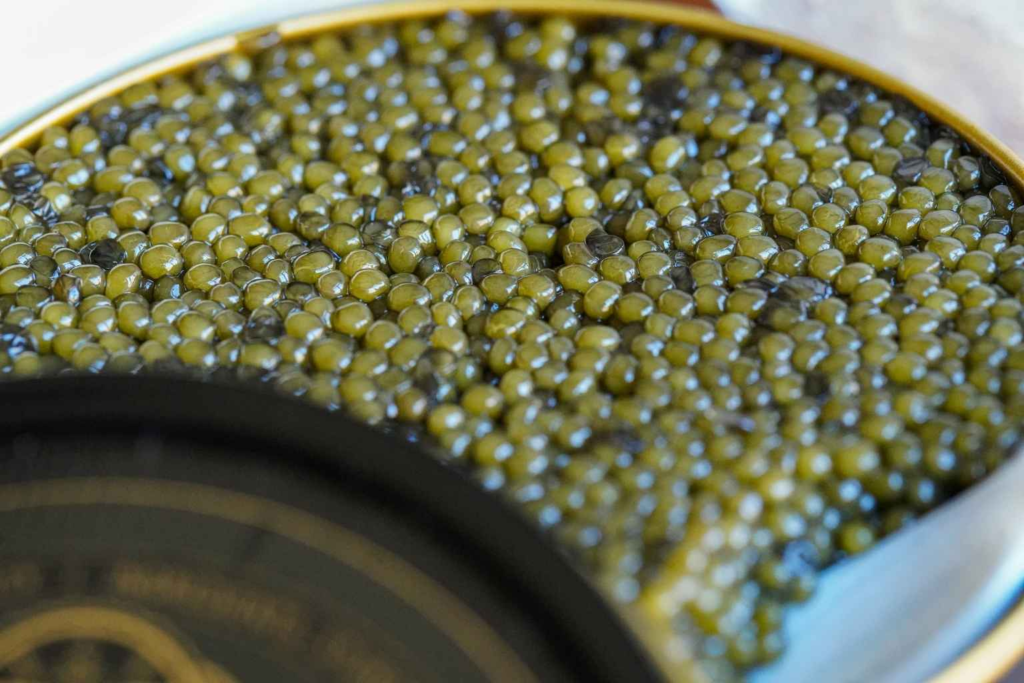
What Is Hybrid Caviar Made From?
Hybrid caviar is produced from crossbred sturgeon species, created to combine desirable traits from two parent fish. These hybrids are developed under controlled aquaculture programs focused on roe quality, growth efficiency, and environmental resilience.
Sturgeon Hybridization and Genetic Selection
The most common hybrids pair Kaluga sturgeon with other large roe producing species, resulting in fish that mature more predictably while still producing high quality eggs. Hybridization allows producers to achieve consistent pearl size, stable membranes, and a balanced flavor profile across harvests. This genetic planning reduces stress on wild populations while improving reliability for chefs and buyers.
Hybrid Caviar Flavor Profile and Texture Characteristics
Hybrid caviar is intentionally crafted to be versatile and widely appealing.
Creamy, Balanced Flavor with Gentle Salinity
The flavor is smooth and creamy with restrained salinity and no aggressive marine notes. It offers a clean, rounded taste that sits comfortably between traditional Osetra richness and the mildness of entry level farmed caviar. The texture is medium firm, with supple pearls that hold their shape and release flavor evenly rather than sharply popping. This balance makes hybrid caviar suitable for both purist tastings and culinary applications.
How Hybrid Caviar Is Produced
Production methods are central to the success of hybrid caviar. Precision aquaculture allows producers to control every variable that influences quality.
Modern Aquaculture and Malossol Processing
Hybrid sturgeon are raised in regulated farm environments with strict control over water quality, temperature, and diet. Roe is harvested only at full maturity, then processed using malossol techniques with low salt levels to preserve natural flavor. Careful grading ensures uniformity in size and texture, while cold storage maintains freshness and structural integrity. These methods deliver dependable quality year round.

Why Hybrid Caviar Is Growing in Popularity
Hybrid caviar has become one of the fastest growing segments of the premium caviar market.
Consistency, Sustainability, and Value
By combining favorable genetic traits with advanced farming systems, hybrid caviar offers stability in both supply and pricing. It avoids the scarcity issues associated with rare wild species while still delivering refined sensory characteristics. This reliability has made it popular with Michelin starred restaurants, luxury hotels, and private buyers seeking confidence in every tin.
Best Pairings for Hybrid Caviar
Pairings should complement the caviar’s creamy balance without overwhelming it.
Champagne, Vodka, and Classic Presentation
Champagne enhances the smooth texture with acidity and lift, while vodka provides a clean, traditional counterpoint that resets the palate. Serve hybrid caviar well chilled, simply presented, using a mother of pearl spoon. Avoid heavy garnishes or acidic toppings that mask its subtle character.
Sustainability and Ethical Considerations
Responsible Farming and Conservation Impact
All legitimate hybrid caviar is farm raised and CITES compliant. Aquaculture operations in China, Italy, and Israel are designed to reduce pressure on endangered wild sturgeon while meeting global demand. Choosing hybrid caviar supports conservation initiatives and reflects a modern approach to luxury sourcing rooted in responsibility and transparency.
Price Band and Market Positioning
Premium Quality Without Extreme Cost
It is typically priced below Beluga and top tier Osetra but above basic sturgeon varieties. This positioning reflects its consistent quality, modern production standards, and broad appeal. For buyers seeking refined flavor, dependable texture, and sustainability without ultra luxury pricing, hybrid caviar delivers exceptional value.

Frequently Asked Questions About Hybrid Caviar
Have questions about hybrid caviar before selecting a tin? This FAQ section explains why hybrid caviar has become one of the most versatile and dependable expressions of modern sturgeon aquaculture, how its creamy, balanced flavor and medium firm pearls compare to Russian Sturgeon, Kaluga, White Sturgeon, and Amur Sturgeon caviar, and why carefully managed production in China, Italy, and Israel plays a central role in its consistency and accessibility. You will also learn how to identify peak freshness through pearl uniformity, texture, and aroma, how to store and serve hybrid caviar to preserve its smooth finish and structural integrity, and what defines authentic, CITES compliant farm raised sturgeon hybrids. If you are seeking refined flavor, reliable quality, and responsible sourcing with strong value, these FAQs will help you choose and enjoy hybrid caviar with confidence.
Is hybrid caviar real caviar?
Yes. It is produced from true sturgeon species and meets all legal definitions of caviar.
What does hybrid caviar taste like?
Creamy, balanced, and clean with mild salinity.
Where is hybrid caviar produced?
Primarily in China, Italy, and Israel through regulated aquaculture.
Is hybrid caviar sustainable?
Yes. It is fully farm raised and CITES compliant.
How should hybrid caviar be stored?
Keep unopened tins at 28 to 32°F and consume within 24 to 48 hours after opening.
What is the best way to serve it?
Serve chilled with Champagne or vodka, using non metal utensils.
Is hybrid caviar good for beginners?
Absolutely. Its balanced profile makes it one of the most approachable premium caviars.
Explore Modern Caviar Innovation
Hybrid caviar showcases how tradition and innovation can coexist. To learn more, explore guides on what defines true caviar, how sustainable aquaculture protects sturgeon species, and how modern breeding techniques shape the future of luxury roe.