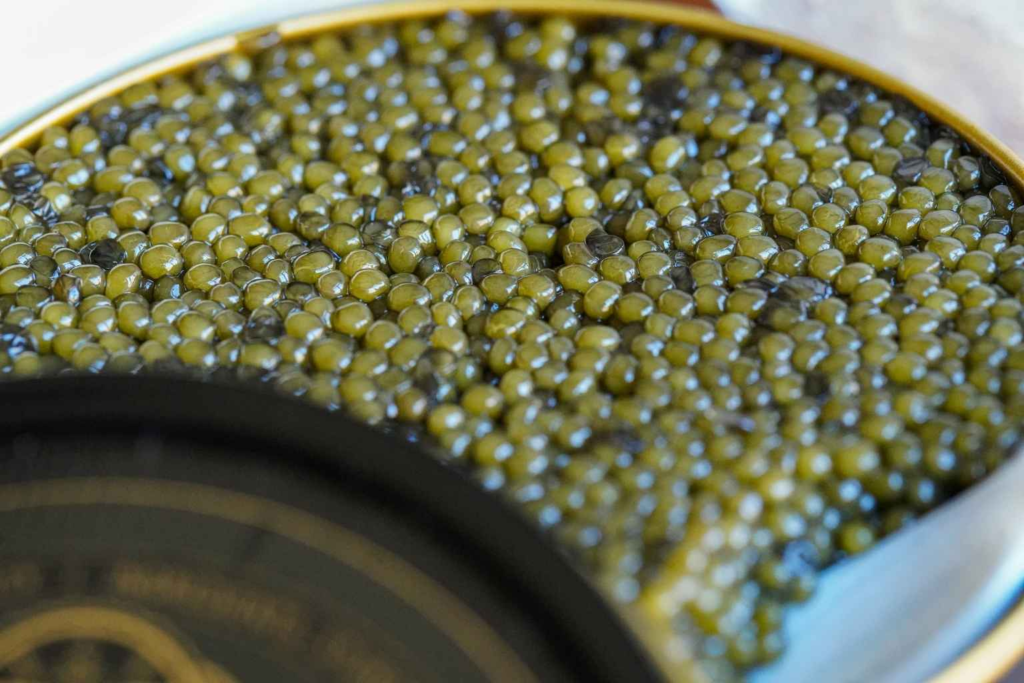
What Is Kaluga Caviar?
Species and Origin
The Kaluga sturgeon can exceed 1,000 kilograms in the wild, making it one of the largest sturgeon species on earth. Modern Kaluga caviar is produced almost exclusively through advanced aquaculture operations in China, with historical roots tied to the Amur River system in Russia. This controlled environment ensures consistent quality, traceability, and legal compliance under international sturgeon protection frameworks.
Kaluga Caviar Taste and Texture
Kaluga caviar is celebrated for its luxurious mouthfeel and deep, clean flavor.
Flavor Profile
The taste is rich and creamy, with soft notes of fresh butter, sweet cream, and a subtle marine salinity. Unlike sharper or more mineral-driven caviars, Kaluga offers a rounded, champagne-like elegance that lingers without bitterness. This balance makes it highly versatile for both purist tasting and elevated culinary applications.
Pearl Size and Structure
Kaluga pearls are large, firm, and resilient, closely resembling those of true Beluga caviar. Each egg releases smoothly on the palate, creating a silky pop followed by a velvety finish. Colors range from light amber to deep olive gray, depending on maturation and grading.

Kaluga Caviar vs Beluga Caviar
Key Differences That Matter
Sustainability and Conservation
Kaluga caviar is a cornerstone of modern sustainable caviar production.
Responsible Aquaculture
Wild Kaluga sturgeon populations are protected, and all commercial Kaluga caviar comes from farm-raised fish. Leading producers use long maturation cycles, low-density farming, and precise malossol salting techniques to replicate wild-quality roe while preserving the species. This approach aligns with global conservation efforts and ensures long-term viability of sturgeon populations.
Legal and Ethical Assurance
Farmed Kaluga caviar complies with international trade regulations and offers full traceability from hatchery to tin. This transparency has made it a preferred choice for luxury buyers who value both quality and environmental responsibility.
How to Serve and Pair Kaluga Caviar
Traditional Serving Methods
Ideal Pairings
Price and Market Position
Value and Prestige

Frequently Asked Questions About Kaluga CaviarCaviar
Have questions about Kaluga caviar before selecting a tin? This FAQ section explains why Kaluga caviar is considered one of the most prestigious and sustainable sturgeon caviars available today, how its rich, creamy flavor and large, firm pearls compare to Beluga and Osetra caviar, and why advanced aquaculture in the Amur River region plays a critical role in its quality and consistency. You will also learn which visual cues indicate peak freshness, how to store and serve Kaluga caviar to preserve its signature texture, and what to look for when sourcing authentic, responsibly farmed roe. If you are seeking Beluga-level indulgence with modern sustainability credentials, these FAQs will help you buy and enjoy Kaluga caviar with confidence.
Is Kaluga caviar real caviar?
Yes. Kaluga caviar comes from a true sturgeon species and meets all international definitions of authentic caviar.
Does Kaluga caviar taste like Beluga?
Very closely. Kaluga offers similar richness and large pearls, with a slightly firmer texture and cleaner finish.
Is Kaluga caviar sustainable?
Yes. All commercial Kaluga caviar is farm-raised under strict sustainability and conservation standards.
Where does Kaluga caviar come from?
It originates from aquaculture farms in China, based on the native Amur River sturgeon species shared with Russia.
How should Kaluga caviar be stored?
Keep unopened tins refrigerated at 28 to 32°F. Once opened, consume within 24 to 48 hours.
Why is Kaluga caviar expensive?
The long maturation time of the sturgeon, careful harvesting, and premium grading contribute to its high price.
Explore Kaluga Caviar Further
Kaluga caviar represents the future of fine caviar. Ethical, refined, and uncompromising in quality. Continue exploring sturgeon species, tasting techniques, and expert pairing guides to deepen your appreciation of this modern classic.