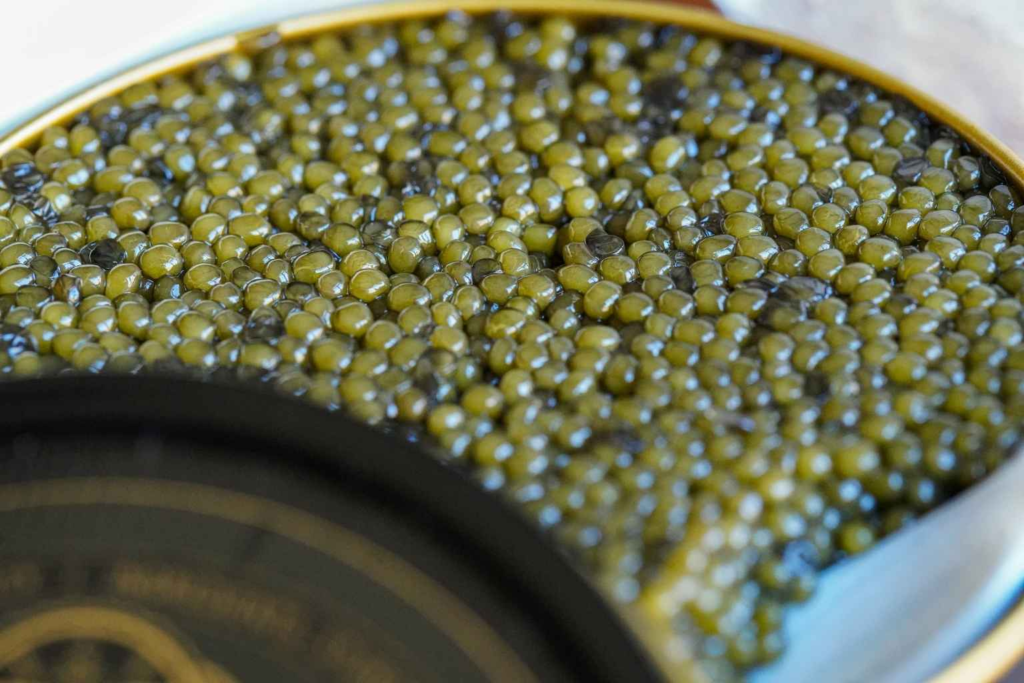
What Is Osetra Caviar?
Osetra caviar comes from the Acipenser gueldenstaedtii sturgeon, a species native to the Caspian Sea and long associated with Persian and Russian caviar heritage. As one of the three classical caviar varieties—alongside Beluga and Sevruga—Osetra sits at the center of global culinary demand due to its balance of structure and flavor. Its grains are medium to large, offering a pleasing pop, a creamy finish, and a refined nuttiness that distinguishes it from the more robust salinity of Sevruga or the buttery softness of Beluga.
Modern production occurs mainly through regulated aquaculture in Italy, France, Israel, Russia, and Iran. These farms replicate natural Caspian conditions to ensure consistent roe maturation and quality. Osetra caviar is typically produced using malossol processing, preserving its natural character with minimal salt. Because Osetra matures more quickly than Beluga—often between 10 and 12 years—its availability is higher, yet prices remain premium due to careful breeding, stringent water quality controls, and ongoing conservation efforts.
The Acipenser gueldenstaedtii Sturgeon and Its Significance
The Osetra sturgeon is admired for its genetic diversity, which produces a broad spectrum of roe colors—from deep umber to rare golden Osetra, one of the most sought-after variations. Its medium-firm membrane gives the roe an elegant elasticity, making it suitable both for purist tasting and for culinary applications that require a stable grain. Chefs value Osetra for its versatility: refined yet expressive, creamy yet structured, able to stand alone or complement complex dishes. This combination makes Osetra one of the most celebrated premium caviar varieties in contemporary fine dining.
Osetra Caviar Taste and Texture
Osetra caviar is defined by a nutty, creamy flavor, accented with clean brininess and a subtle mineral finish. Its complexity comes from the species’ natural lipid profile, slow maturation, and precise salting methods. The grains offer a medium-firm texture, allowing them to gently pop on the palate without the fragility seen in Beluga. This interplay of creaminess and structure gives Osetra remarkable depth, making it ideal for tasting flights and pairing menus.
Color variation also signals sensory differences. Darker Osetra often leans toward robust, savory notes, while lighter or golden tones introduce a softer, buttery quality. This diversity makes Osetra particularly appealing to chefs and collectors who value nuance and terroir-like expression in sturgeon roe.
Osetra vs Beluga vs Sevruga: A Sensory Comparison
Beluga is the softest and most buttery; Sevruga is the saltiest and most intense. Osetra sits elegantly in between. It offers greater firmness and nut complexity than Beluga, yet more refinement and roundness than Sevruga. For many gourmands, Osetra delivers the most balanced tasting experience—rich enough for luxury service but structured enough for consistent plating. This equilibrium explains why Osetra is often considered the chef’s preferred caviar for versatile culinary execution.

How Osetra Caviar Is Harvested and Produced
Due to global conservation measures, commercial Osetra caviar now comes from high-standard aquaculture farms that specialize in long-term maturation cycles, species-specific feeding programs, and sustainable water management. Farms in Italy, France, Iran, and Russia are known for replicating Caspian-style environments, where the sturgeon can develop roe with optimal lipid content and membrane strength.
Once mature, the roe is carefully harvested, sieved, rinsed, and salted. Minimal handling is essential to preserve grain integrity, especially when producing top-grade malossol caviar. Each batch undergoes strict evaluation to ensure uniformity, texture, flavor, and freshness.
Grading Criteria and Malossol Processing
Siberian caviar is almost always produced as malossol, with salt levels typically between 3–4%. This light curing enhances the roe’s natural butteriness while maintaining clarity and freshness. Quality control focuses on grain uniformity, sheen, aroma, and membrane strength. Top-grade Siberian caviar displays clean color, smooth texture, and a balanced, elegant flavor.
Why Osetra Caviar Is Expensive
Osetra occupies the $$$ price band, reflecting its long production timeline, high farming standards, and continued global demand. Although more accessible than Beluga, Osetra remains a premium delicacy due to the resources required for its cultivation: pristine water environments, specialized feed, multi-year maturation, and controlled harvesting techniques.
Its price also reflects its sensory depth and rarity of high-grade offerings. Golden Osetra commands particularly high values due to limited availability and strong collector demand.
Factors Affecting Osetra Pricing
Key pricing variables include roe color, grain size, grade, farm reputation, and country of origin. European Osetra often commands premium pricing due to strict aquaculture regulations. Seasonal harvest conditions, feed quality, and maturation cycles further influence cost. Packaging, cold-chain logistics, and CITES compliance may also add import expenses in certain regions.
Best Pairings for Osetra Caviar
Osetra’s nutty, creamy profile pairs exceptionally well with Champagne, dry white wine, blinis, crème fraîche, and neutral bases that complement its balanced salinity. Because of its medium-firm texture, Osetra withstands gentle heat contrasts, making it suitable for pairing with warm blinis or soft-scrambled eggs.
Pairings should highlight Osetra’s structure without overshadowing its subtleties. Mineral-driven wines, light dairy, and refined carbohydrates create the ideal canvas.
Traditional and Modern Serving Pairings
Classic pairings include blanc de blancs Champagne, high-mineral Chablis, cold vodka, and warm blinis. Contemporary chefs experiment with cultured butter, pomme purée, seafood custards, and delicate vegetable veloutés. The goal is to preserve purity while enhancing contrast: cool roe, warm bases, creamy textures, and clean aromatics. Paired correctly, Osetra caviar opens with layered nutty tones and finishes with elegant creaminess.
How to Store and Serve Osetra Caviar
Osetra requires precise cold storage between −2°C and 2°C. Unopened tins should be refrigerated at stable temperatures and consumed within the producer’s recommended timeframe. Once opened, Osetra caviar should be enjoyed within 24–48 hours to maintain perfect texture and aroma.
For service, keep the tin chilled on ice, but avoid prolonged exposure that may soften grains. Always use a mother-of-pearl tasting spoon to avoid metallic flavor interference.
Service Etiquette and Handling Tips
Handle the roe gently and avoid stirring or applying pressure to the grains. Present the caviar just before tasting, keeping the tin lightly covered between servings. Maintain strict cold-chain handling from delivery to presentation. Correct service ensures that Osetra’s medium-firm texture and delicate nutty tones remain vibrant throughout the dining experience.

Sustainable and Farmed Osetra Caviar
Modern Osetra caviar represents a major success in sustainable aquaculture. With wild stocks regulated under CITES, farms prioritize long-term species preservation through controlled breeding, ethical nutrition programs, and environmentally responsible water systems. These practices ensure consistent production while protecting natural sturgeon populations.
Sustainable Osetra is now the standard for global fine dining and premium retail.
Service requires minimal tools: a chilled tin, mother-of-pearl spoon, and a bowl of ice. The roe should be placed on ice only long enough to maintain temperature; extended exposure can soften grains.
Conservation Initiatives and CITES Oversight
Osetra sturgeon are protected by international trade laws requiring documentation for legal import and export. Leading farms follow rigorous environmental standards, genetic monitoring programs, and habitat management strategies. Purchasing certified Osetra supports conservation and ensures full traceability from hatchery to tin. Consumers benefit from quality assurance and ethical sourcing.
Where to Buy Authentic Osetra Caviar Online
What to Look for in a Trusted Supplier
A reliable supplier provides traceable origin data, CITES documentation, clear grading descriptions, and precise handling instructions. Premium sellers also disclose tasting notes, grain size, and color. Avoid vague descriptions or pricing significantly below market value. Authentic Osetra requires meticulous farming, so price and transparency must align with quality.
Frequently Asked Questions About Osetra Caviar
Have questions about Osetra caviar before selecting your perfect tin? This section highlights everything enthusiasts and first-time buyers want to understand: what sets Osetra apart as one of the world’s most celebrated sturgeon caviars, how its medium-sized pearls, nutty complexity, and mineral finish compare to Beluga and Sevruga, and how factors like color variation—from golden to deep brown—signal differences in rarity and flavor. You’ll also learn the ideal storage and serving practices, how pasteurized vs. fresh Osetra affects texture, and what to look for when verifying authenticity and grade. If you’re considering a refined, elegantly layered roe, these FAQs will help you purchase with confidence and savor Osetra caviar at its very best.
What does Osetra caviar taste like?
Why is Osetra caviar expensive?
Slow maturation, high farming standards, and strong global demand elevate its price.
What is the difference between Osetra and Beluga?
Beluga is softer and buttery; Osetra is firmer with nutty complexity.
How long does Osetra last once opened?
Typically 24–48 hours under proper refrigeration.
Is farm-raised Osetra sustainable?
Yes—modern aquaculture ensures ethical, environmentally responsible production.
What color should Osetra caviar be?
Shades range from dark brown to light amber and rare golden tones.
What wines pair well with Osetra?
Champagne, Chablis, and crisp mineral-driven whites are ideal.
Explore Amur Sturgeon Caviar Further
Amur sturgeon caviar represents refined modern caviar craftsmanship. Balanced, ethical, and versatile, it is often compared to other prized varieties such as white sturgeon caviar, which is known for its larger pearls, buttery texture, and clean, nutty finish. Continue exploring species comparisons, tasting notes, and pairing guides to better understand where Amur sturgeon caviar fits within the world of fine caviar.