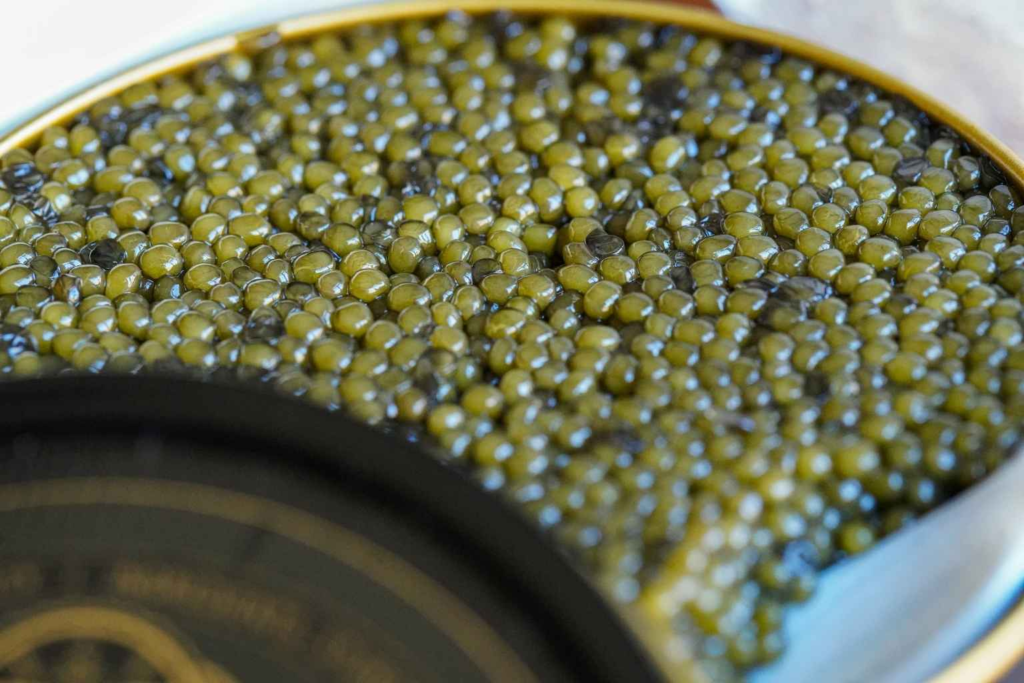
What Is Salted Caviar?
Salted caviar is sturgeon roe that has been cured with salt after harvesting and cleaning. Salt seasons the eggs while helping preserve a food that is naturally very perishable. The amount used can also change the texture of the pearls and how strongly the natural flavor of the roe comes through.
Why salt is used in caviar
Fresh sturgeon roe requires careful processing soon after harvest. Once the eggs have been separated and cleaned, salt is added as part of the curing process.
A lighter cure allows more of the caviar’s natural character to remain noticeable. Depending on the species, this can include buttery, marine, nutty, or mineral notes. Salt also affects how the pearls feel and release flavor when eaten.
Lightly salted and heavier cures
Salted caviar can be prepared with different levels of salt:
Malossol uses a restrained salt cure
Heavier cures have a stronger salty character
Salt level can influence preservation and texture
The producer adjusts the cure to suit the roe
Flavor Profile of Salted Caviar
Salted caviar can range from gently saline to noticeably salty depending on the curing method. With a restrained cure, the flavor of the sturgeon roe remains easy to recognize.
What salt brings to the flavor
Salt works with flavors already present in the roe. A lighter cure may leave room for creamy, buttery, marine, nutty, or mineral notes, depending on the sturgeon species and condition of the eggs.
Texture after curing
Salt also affects how caviar feels in the mouth. The curing process can influence the firmness of the membrane and the way each pearl releases its flavor.
Texture still varies from one caviar to another. Egg maturity, species, handling, and storage all contribute to whether the pearls feel delicate, firm, or somewhere between the two. This is why two salted caviars can have very different textures even when their salt levels are similar.

Why Salt Level Matters in Caviar
Salt changes more than the immediate taste of caviar. The amount used during curing affects how the roe develops after processing and how easily you can notice the character of the sturgeon species.
Balancing salt with the roe
A restrained cure keeps the salt from dominating the eggs. This gives the natural flavor of the roe more room to come through, especially in caviar with mild or delicate characteristics.
A heavier cure creates a more pronounced salty taste. It can also make differences between subtle caviar varieties less obvious when tasted side by side.
Curing depends on the roe
There is no single salt level that suits every batch. Producers consider the condition and maturity of the eggs when preparing caviar.
How to Serve Salted Caviar
Salted caviar is best served cold and handled gently. Simple presentation makes it easier to notice the salinity, texture, and natural flavor of the roe.
Serving salted caviar on its own
Start with a small spoonful before adding other foods. Tasting the caviar plain gives you a clearer sense of its salt level and how the pearls feel in the mouth.
Choosing accompaniments
Mild foods work well because they do not compete heavily with the salt and natural flavor of the roe.
Blinis, toast points, potatoes, eggs, or a small amount of crème fraîche can provide a neutral base. With saltier caviar, keep additional seasoning light so the finished bite does not become overly salty.
Curing Styles for Salted Caviar
The way caviar is salted can change its flavor, texture, and keeping qualities. Producers adjust the cure according to the roe they are working with, which is why salted caviar can taste quite different from one tin to another.
Malossol caviar
Malossol means “little salt” and is used for caviar prepared with a relatively light cure. The goal is to season the eggs while keeping the natural character of the roe easy to taste.
Heavier salt curing
Some caviar is prepared with more salt, giving it a stronger saline character. Heavier salting has traditionally been useful for preservation, although it creates a different tasting experience from lightly cured caviar.
What to check on the label
Terms such as malossol can tell you something about the curing style, but the finished caviar still depends on the roe itself. When comparing tins, check the sturgeon species, producer, storage instructions, and any information provided about processing.
These details make it easier to understand whether you are buying a lightly cured caviar or a product where salt has a stronger presence.

FREQUENTLY ASKED QUESTIONS ABOUT SALTED CAVIAR
Salt is used during caviar curing to season the roe and help preserve it. The amount of salt can vary, so one tin may taste gently saline while another has a much stronger salt presence. Species, egg maturity, processing, and storage also affect the final taste and texture.
Understanding the different curing styles makes it easier to read caviar labels and choose a product that suits your taste.
What is salted caviar?
Salted caviar is sturgeon roe that has been cleaned and cured with salt as part of the production process.
Why is caviar salted?
Salt seasons the eggs and helps preserve the roe. It also affects the texture and the way the natural flavors of the caviar come through.
What does malossol caviar mean?
Malossol means “little salt.” The term is commonly used for caviar prepared with a light salt cure that keeps the natural character of the roe noticeable.
Does more salt make caviar last longer?
Heavier salting has traditionally been used to improve preservation. Modern caviar also depends on refrigeration and proper storage, so salt is only one part of keeping the product in good condition.
Does salt change the texture of caviar?
Yes. Curing can affect the firmness of the egg membrane and the way the pearls release in the mouth. Species, maturity, and handling also influence texture.
Is salted caviar supposed to taste very salty?
Not necessarily. Lightly cured caviar can have gentle salinity alongside the roe’s marine, buttery, nutty, or mineral qualities. A heavier cure makes the salt more noticeable.
Understanding Salt in Caviar
Salt has a clear purpose in caviar production. It seasons the roe, helps with preservation, and influences the way the pearls feel when eaten. Small changes in the cure can make a noticeable difference to the finished caviar.
When comparing salted caviar, pay attention to more than salinity. Species, roe maturity, freshness, and storage all contribute to the final taste and texture.
For a closer look at caviar curing, explore malossol caviar, caviar curing methods, and pasteurized vs fresh caviar to see how different processing choices affect the finished roe.